
A dead battery always seems to happen at the worst possible time. You are late for work, the school run is waiting, or you are parked in a spot where nobody can easily help. The good news is that you do not need to be a mechanic to fix it. At 247 Quick Breakdown, we help stranded drivers get back on the road safely, and one of the most common questions we hear is simple: how do you jump start car problems yourself? This guide walks you through every method, step by step, so you feel confident the next time your battery lets you down.
Why Does a Car Battery Die?
Before you learn how to jump start car problems, it helps to understand why batteries fail in the first place. Cold weather is one of the biggest culprits, since low temperatures slow down the chemical reaction inside the battery and reduce its power. Leaving your headlights or interior lights on overnight is another common cause, as this quietly drains the charge while the engine is off.
Old age also plays a part. Most car batteries last between three and five years, and once they pass that mark, they lose their ability to hold a full charge. Short journeys are another hidden problem, because the alternator does not get enough time to recharge the battery fully before the engine switches off again. If your battery has died more than once in recent months, it is worth having it tested rather than jump starting it repeatedly.
What Is a Battery Starter Jumper?
A battery starter jumper, often just called a jump starter, is a portable device that stores its own power and can send a burst of energy straight into a dead battery. Unlike traditional jumper cables, a battery starter jumper does not need a second vehicle nearby. You simply connect it to your battery terminals and it does the rest.
These devices use lithium ion cells, which are lightweight and hold their charge for months without needing a top up. Many models double as power banks too, so you can charge a phone or tablet with the same device. If you drive regularly and want peace of mind, keeping a battery starter jumper in the boot is one of the simplest ways to avoid being stranded.
How to Jump Start a Car with Jump Leads
Jump leads remain the most traditional method and work well when a second car is available. Here is the correct process to jump start a car using leads.
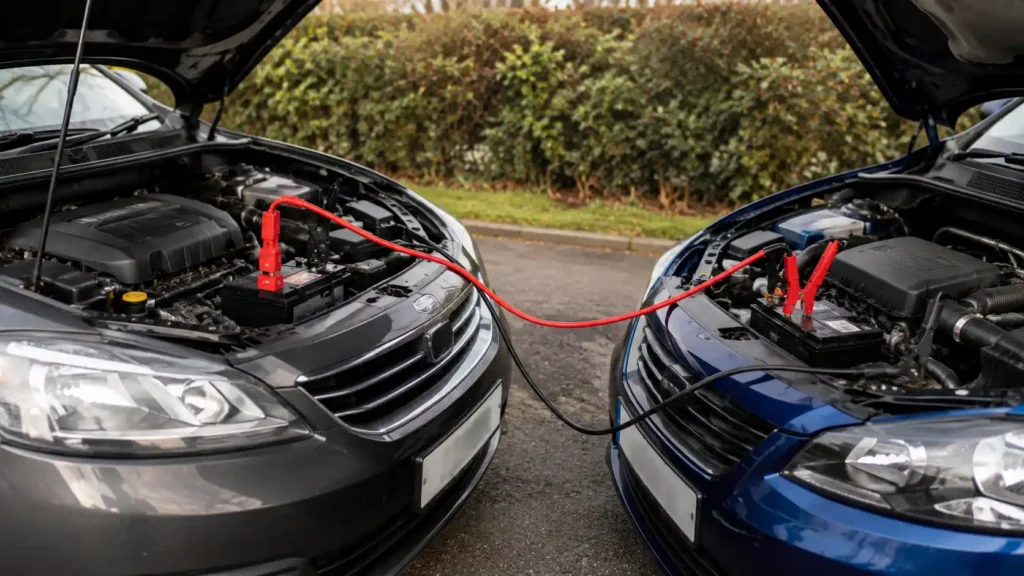
- Park the working car close enough for the leads to reach, but make sure the two vehicles are not touching.
- Turn off the engines and ignitions in both cars before you connect anything.
- Attach the red clamp to the positive terminal of the flat battery, then attach the other red clamp to the positive terminal of the working battery.
- Attach the black clamp to the negative terminal of the working battery, then connect the final black clamp to an unpainted metal part of the car with the flat battery, away from the battery itself.
- Start the working car and let it run for a few minutes.
- Try to start the car with the flat battery. If it starts, leave both engines running for a short while before removing the leads in reverse order.
This method is reliable, but it does depend on finding another driver who is willing to help. That is exactly the gap a battery starter jumper is designed to fill.
How to Jump Start a Car with a Battery Pack
A battery pack, or portable jump starter, lets you get moving without needing anyone else. If you want to jump start car problems on your own, this is the method most people reach for. Since more drivers now carry one in their car, it is worth knowing the correct steps.
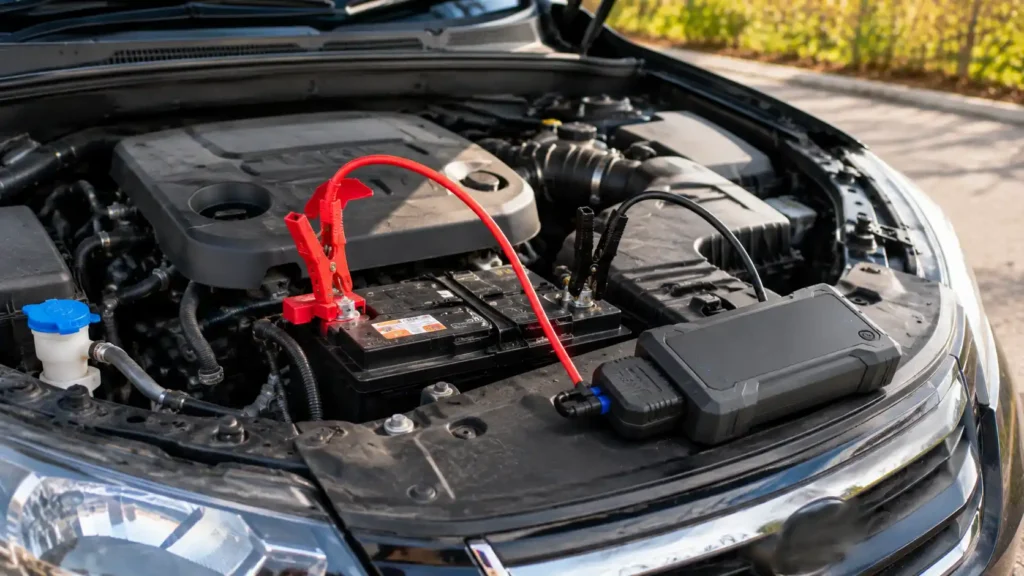
First, make sure the device is switched off and fully charged before you begin. Connect the red clamp to the positive terminal of your car battery, then connect the black clamp to a solid metal point on the engine or chassis rather than the negative terminal itself. Switch the jump starter on and wait for its indicator light to confirm a good connection. Start your engine, and once it fires up, switch off the jump starter and disconnect the clamps in reverse order.
Most battery packs can jump start a car in under a minute, which makes them ideal for anyone who wants a quick and independent fix. Always check the manual for your specific model, since some brands use a slightly different sequence or safety switch.
How to Jump Start a Car with Cables
Cables and leads refer to the same basic tool, though the phrase is sometimes used when people are connecting a car directly to a jump starter rather than to another vehicle. The golden rule with any cable connection is to always attach the positive clamp first and the negative clamp last. Reversing this order raises the risk of a spark near the battery, which can be dangerous.
When you disconnect the cables, do the opposite. Remove the negative clamp first, then the positive one. Keeping this order consistent every time, whether you are working with another car or a portable pack, is the safest habit you can build.
What Is the Correct Way to Jump Start a Car?
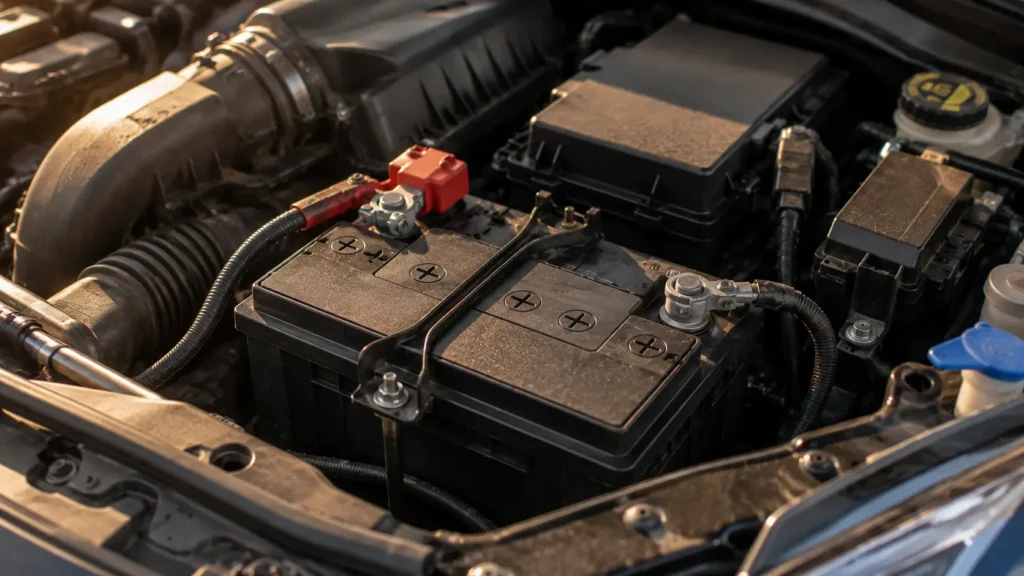
There is one correct way to jump start a car, regardless of which tool you use, and it comes down to sequence and safety. Always connect positive to positive first, then negative to negative or to an earthing point. Never let the two clamps touch each other once they are alive. Keep sparks and flames away from the battery, since batteries can release a small amount of hydrogen gas.
It also helps to check both batteries for damage or leaking before you start. If a battery looks swollen, cracked, or is leaking fluid, do not attempt to jump start it. Call a professional instead, since a damaged battery can be unpredictable.
Are Jump Starters Safe?
Yes, jump starters are safe when they are used correctly and according to the manufacturer’s instructions. They are actually one of the safer ways to deal with a flat battery, since a good quality battery starter jumper has built in protection against reverse polarity and short circuits.
That said, a few sensible precautions go a long way. Never use a jump starter that has been dropped, soaked, or damaged in any way. Keep it away from open flames, and store it somewhere dry when it is not in use. If your car still will not start after a proper attempt with a fully charged device, the issue may be something other than the battery, such as the alternator or starter motor, and a mechanic should take a look.
How to Charge a Car Battery with a Jump Starter
Once your car is running again, it is worth understanding how the charging side works too. When you jumpstart a car with a battery charger or portable jump starter, the device gives your battery an initial boost, but it does not fully recharge it. The real charging happens once your engine is running, since the alternator takes over and slowly restores the battery to a healthy level.
For this reason, it is best to drive for at least fifteen to twenty minutes after a jump start, rather than switching the engine straight off again. Short trips of five minutes or less will not give the alternator enough time to do its job, and you may find yourself with a flat battery again the next morning.
Common Mistakes to Avoid
A few small errors cause most jump starting problems, and they are easy to avoid once you know what to look for.
- Connecting the clamps in the wrong order, which increases the risk of sparks.
- Letting the red and black clamps touch each other while they are connected to a battery.
- Trying to jump start a car in the rain without any cover, since moisture and electrics do not mix well.
- Leaving a portable jump starter uncharged in the boot for months at a time.
- Ignoring repeated battery failures instead of having the battery tested.
Avoiding these mistakes will keep both you and your vehicle safe, whether you are using leads, cables, or a modern battery pack.
Choosing the Right Battery Starter Jumper
Not every jump starter is built the same way, and picking the right one makes a real difference the next time you need to jump start car issues on your own. Petrol engines generally need less power than diesel engines, so check the peak amp rating before you buy. A small city car might only need around 400 amps, while a larger diesel SUV can need 1000 amps or more.
Battery capacity matters too. A higher capacity, measured in mAh, means the device can jump start a car several times before it needs recharging, and it can also charge your phone or laptop in an emergency. Look for a model with built in safety features such as reverse polarity protection, short circuit protection, and over current protection, since these reduce the risk of damage to your car’s electronics.
Size and weight are worth considering as well. Many of the newer battery starter jumper models are small enough to fit in a glovebox, yet still powerful enough to start a family car. A built in torch is a small but genuinely useful extra, especially if you end up dealing with a flat battery after dark.
How to Prevent a Flat Battery in the Future
Learning how to jump start a car is useful, but preventing the problem in the first place saves you time and hassle. A few simple habits make a noticeable difference to how long your battery lasts.
Turn off all lights, the radio, and any charging cables before you leave the car, even for a short stop. Have your battery tested once a year, particularly if it is more than three years old, since a quick check can catch a weak battery before it fails completely. If you only drive short distances, try to take a longer drive every week or two so the alternator has a proper chance to recharge the battery.
Keep the battery terminals clean and free of corrosion, since a build up of white or greenish residue can weaken the connection and make starting harder in cold weather. During winter, park in a garage or somewhere sheltered when possible, as extreme cold is one of the fastest ways to drain a battery’s remaining power.
Carrying a fully charged battery starter jumper in your car is one of the simplest forms of insurance you can have. It costs very little compared to a breakdown call out, and it means you are never fully reliant on finding another driver to help.
When to Call a Professional Instead
Sometimes a flat battery is a sign of a bigger issue. If your car will not start even after a correct jump start attempt, or if the battery keeps dying within a day or two of being charged, it is time to bring in an expert. Persistent electrical faults, a failing alternator, or a battery that is simply beyond saving are all common reasons a jump start alone will not solve the problem.
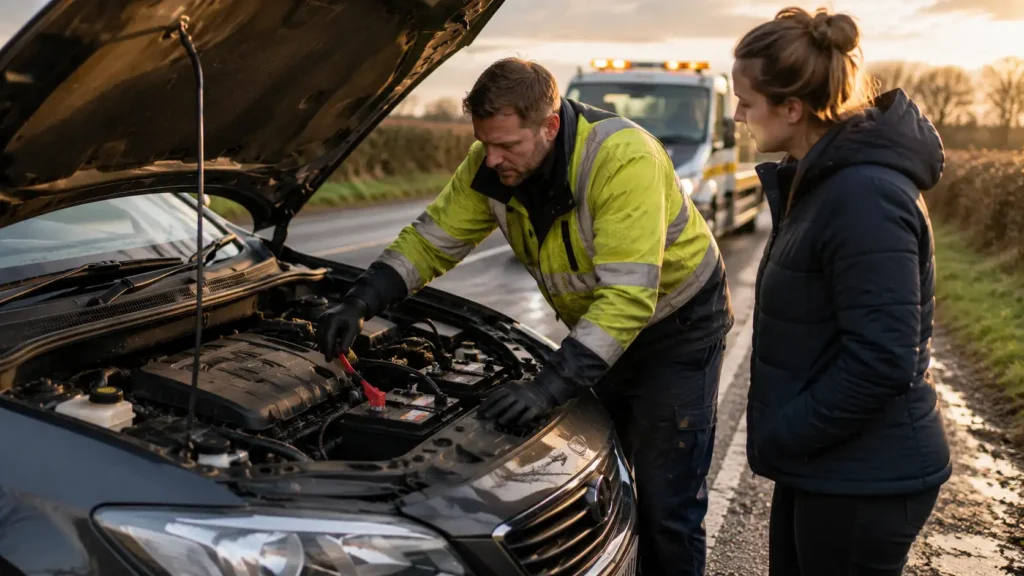
This is where a roadside assistance team can help. Rather than guessing at the cause, a trained technician can test the battery and the charging system on the spot and tell you exactly what is going wrong.
FAQs
How to jump start a car with jump leads? Connect red to positive on both batteries, then black to negative on the working battery and to an earthed metal point on the flat car. Start the working engine first, then try the flat one.
How to jump start a car with cables? Attach positive first, then negative, in the same order as jump leads. Always remove them in reverse, negative first, then positive.
What is the correct way to jump start a car? Positive to positive first, negative to negative or earth second. Avoid letting the clamps touch and keep sparks away from the battery.
How to jump start a car with a battery pack? Connect the clamps to your battery, switch the pack on, wait for the light to confirm connection, then start your engine.
What is another name for a jump starter? It is also called a battery starter jumper, a portable jump starter, or a jump pack.
Final Thoughts
Knowing how to jump start car problems is a skill every driver benefits from, whether you rely on jump leads, cables, or a battery starter jumper you keep in the boot. Follow the correct order, connect positive first and negative last, and always put safety before speed. If your battery keeps letting you down or your car still will not start, do not keep guessing. A proper diagnosis will save you time, money, and another cold morning stuck on the drive.